


High School to College Athletics: How to help an athlete fulfill their potential!
- Ronda Thomas

- Apr 15, 2025
- 8 min read
The new season has begun (or is getting ready to begin) and just when you think you have a moment to breathe, it's already time to start looking ahead! Not just for uniform fittings, Spring training, Program Mission Statements, Summer training, Camp, Fundraisers, Fall craziness, and more, but also to help those rising Seniors start to think about their NEXT journey as a possible collegiate cheerleader or dancer!
Yes, believe it or not YOU, Coach, can and should play a pivotal role in your athlete's potential to cheer or dance at the collegiate level. Granted, the first discussions are always with their parents and their families. But it's important you, as their Coach, help re-iterate to them that the dream may be slightly bigger than the reality to start...but the reality can come close with the right research and planning!
Some "non-athletic program" factors that you can help discuss with your athlete (and/or reiterate) include, but are not limited to:
Proximity to family can be a determining factor (one way or another!). Some students want to stay close to home and even commute from home where others want to see and live in a different part of the country and everything in between.
Budget is always a consideration for families -- probably one of the biggest considerations! There are programs that can be looked into that allow for students to go out-of-state without the considerable costs typically associated with out-of-state school attendance. This includes both athletic and non-athletic programs depending on school offerings. As long as the student understands the budget they may be working with, it may be possible for you to help them find programs that fit their athletic and non-athletic goals.
Course Offerings are often a factor for many students, especially electives. Many students don't necessarily go into college knowing exactly what they want to "be when they grow up." They have ideas and maybe have even talked to families about options and post-graduate businesses, but there's still a curiosity within them about what else there may be that interests them. A school with a vast variety of course offerings and electives, allowing students to expand their knowledge and broaden their horizons may be an important piece.
Major/Minor offerings can definitely be a factor, especially for those students steadfast in knowing what they want to do. If they want to be a doctor coming out of school, they are likely to choose a school with a solid reputation in their field of study that has a reputation for being one of the "best of the best" for Medical studies.
Living arrangements can play a factor depending on comfort zones and rules for living on and off campus in the Freshman Year.
"Vibe" and/or Atmosphere of the school. There are some campuses where students, when they visit, can just feel that it's right for them. They feel they could truly belong there and immerse themself in the experience, being involved, and enjoying moments inside and outside the classroom. This could be based on any number of factors but it's an important one as this may be a place they call home for 4+ years!
And though there are dozens of other ideas that could be added to this list, for those wanting to do college cheer or dance, a natural category they are going to look at is the collegiate cheer or dance program. What does it look like? What is required of the athlete when on the team? What sports do they cheer for and/or when do they perform? What are the hours of practice? What are the general expectations? What does it take to make the team?
Most of these answers can be found with a simple Google search and many college programs start doing clinics towards Q4 of the current year to allow athletes to prepare for tryouts for the next year. However, if your athlete waits that long, they will be behind the proverbial eight ball and will be sprinting to catch up with the hundreds of other talented athletes vying for a spot on the team!
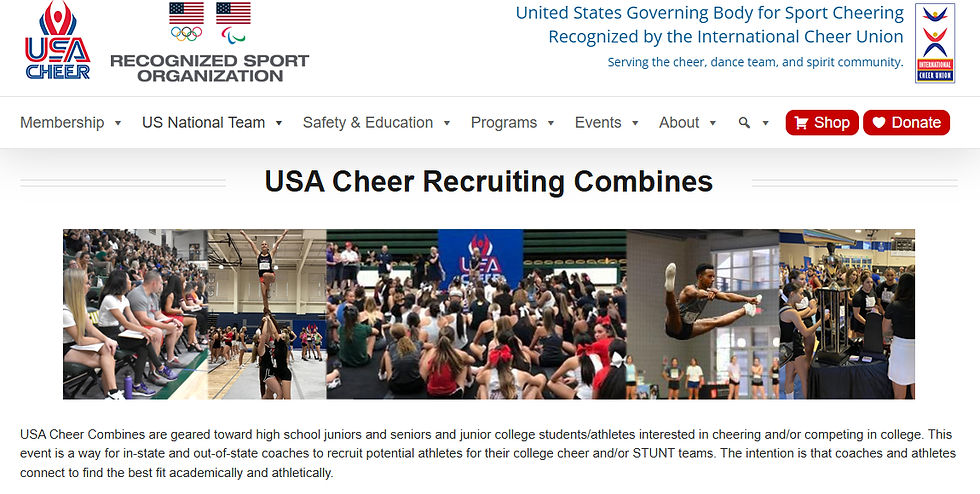
So, as their Coach, you ask, what can I do? First and foremost, have a separate discussion with each of your rising Seniors about their goals for college. Maybe they've been cheering for many years in preparation (best case scenario) or maybe they just discovered their love for cheer this past year and want to prepare (hard but not impossible) or somewhere in between (most cheer athletes). These are discussions you can offer your underclassmen as well so they can start planning ahead. However, if you have those rising Seniors that REALLY want to cheer or dance in college, make them a priority first and then bring their interested teammates along with them.
Next -- set the expectations! Talk to them about all the other things they should be focused on first when choosing a school and then work with them on researching the cheer or dance program. If they are wanting a highly competitive All-Girl team but their top school only has Co-Ed team, discuss what that may mean in regards to making or not making the team and what other options may be -- maybe there's a local All-Star program in a nearby town they can be part of. Maybe the school has a STUNT team they can tryout for instead, and so on. Set the expectation so they can focus on training realities to ensure the greatest possible outcome.
In addition, your athlete may be the best on the team, the best in the town, maybe even a top contender in the State. Maybe they are known for their tumbling skills, their flying skills, basing skills, or more. That's awesome and celebrate that! However, when they walk into a collegiate room, there are going to be hundreds of others that are just as good...and even better. This is not to scare them...it's to motivate them to work, push, and never sit back thinking "that was good enough." Refer to last month's Blog about self-motivation and accountability as that will help them feel more prepared as they walk through the door to work next to, and yet compete with, other "best of the bests."
Conversely, if you have an athlete that really wants to cheer or dance in college but doesn't feel they can, help them to realize the things that they have going for them already and build those strengths. Help them be honest about where their weaknesses may be and come up with a plan together on how to work through those. Go through the tryout expectations with them and make a checklist to work on and goals to work towards so they can truly see their progress and path forward towards the goal of trying out for the team they are hoping to be part of in their college years.
Finally, before getting to the logistical details, make sure they understand - as cliche as it may sound - that the journey there is truly part of the fun. They are growing and evolving as athletes, they are role models for others, they are proving to themselves and others that they will fight and do whatever is needed to reach their dreams and goals. The things they learn as they do that will shape and help them grow into someone that - long after they hang up the cheer skirt and throw away the pom poms - doesn't give up, holds themselves to a higher standard, fights for their goals, and paves their own way to their next journeys, even if the end stop isn't one they were expecting. There are limited spots on teams and not everyone can make it. But only those that try will ever know if they could. Make sure your athlete embraces the effort, not just the final result.

Now, for the logistics -- as a coach, to help your team members get ready for the next step, here are some things you can do!
Skill Development:
Improve Technical Skills: These include stunts, tumbling, dance, and jumps. Make sure to rotate athletes in stunt groups. The more well-rounded team members are, the more opportunity to rotate into places during clinics and, eventually, tryouts. Flyers should be able to fly on any group/guy. Bases should be able to base any flyer and/or work with any base on the team. Backspots should be able to backspot any team.
Learn New Skills: Help the team grow and evolve by learning and practicing new skills as much as possible. Transitions in stunts, body positions, movement through body positions, dismounts, and more. Different types of pyramids, pyramid transitions, linear pyramids, "circus" pyramids and more.
Work on proper technique -- don't sacrifice a "hit" for the technique. A true HIT for a stunt is the combination of proper technique and solidly landing at whatever level is being aimed for.
Teach Different positions to different people. Athletes' bodies do change and grow. They could be a flyer one year and come back from summer and you can see their height is starting to evolve at a fast pace. Let them continue to work flying skills where possible but also help them learn to backspot both in stunt groups and pyramids. The more well-rounded an athlete the better.
Showcasing Skills:
Compile a video of your team members' best performances and include a variety of skills, showcasing their versatility.
Send highlight reels to coaches at schools they're interested in, making them aware of their abilities.
Encourage your athlete to attend College Cheer Clinics. At times, if possible and if they desire, go with them. These events offer opportunities to meet coaches, learn new skills, and potentially get noticed!
Researching Programs and Understanding the Process:
Research the school choices to see what type of teams they have. Is it co-ed, AG, both, STUNT, Jazz, Hip Hop, Pom, etc. Do they compete? If they do, where do they compete and in what division? Know the questions to ask so you can help explain to your athlete what that means and how that information can be incorporated into their prep pathway. Also keep in mind that if all other things in two schools are equal for your athlete, the athletic program, and them making said program, may be the one that tips the scale of their decisions. The more you know, the more you can help your athletes grow and make a choice that is hopefully going to be a place they are proud to be and can continue to grow and evolve their skills!
Investigate the requirements and tryout processes at each college and discuss them with your rising Senior (and others interested). Though collegiate programs can change focuses from year to year, consider putting together a binder for future athletes to look at solely based on cheer or dance program ins and outs. This will help alleviate some of the footwork in the future and give your underclassmen a headstart as well!
Though there's so much more that comes with looking at being a collegiate athlete, you, as a Coach, can help them find that path. Hopefully this post will help get you (and your athletes!) started! More to come as the year progresses!
For more tips and/or ideas for your athletes that are interested in collegiate cheer programs from coast to coast, feel free to reach out to info@cheeranddance.com. We're happy to help you and your athletes do research, to keep you apprised of college clinics and/or combines in your area or their area of choice, and to connect them to Coaches and Programs they are interested in!
Happy Spring and we hope you have a very Happy Easter!

Comments